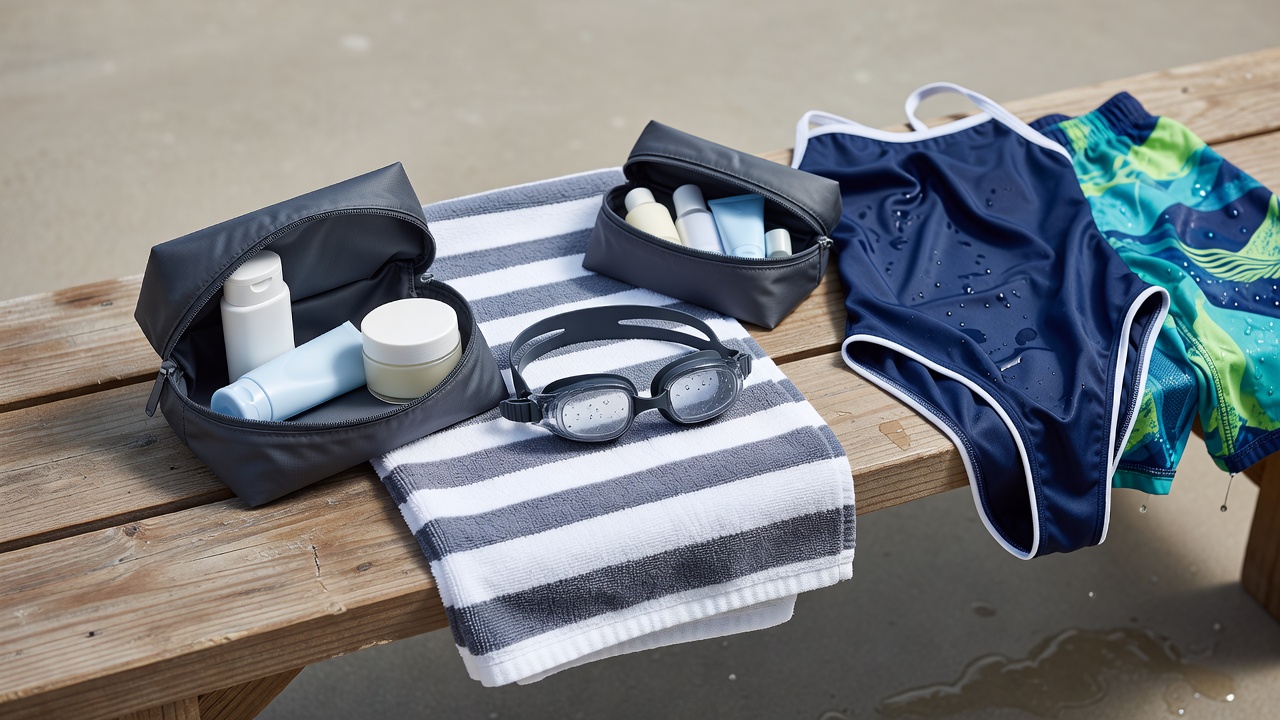
Group one: protection you can reach
- Broad-spectrum, water-resistant SPF 30 or higher sunscreen, with readable directions.
- An SPF lip product used according to its label.
- Suitable protective clothing and, where practical, a secure hat and UV-protective eyewear.
- A plan for shade and breaks, not just another product.
Carry enough sunscreen for the people and duration involved, including reapplication. A tiny sample may fit neatly but fail halfway through a long day. Keep the bottle in an accessible pouch rather than at the bottom of a board bag. Follow its storage instructions, protect it from excessive heat and direct sun, and check the expiration date before leaving.
Keep sunscreen in its original container when practical so directions, warnings and expiry details stay with it. If travel restrictions require smaller packaging, use a suitable container and retain the original information, but remember that repackaging can introduce uncertainty about stability and identification. Do not use a mystery bottle that has been rolling around in the gear box since last season.
Group two: a basic rinse set
- Access to fresh water, or a clean supply when facilities are uncertain.
- A small, familiar mild cleanser in a securely closed container.
- A clean towel and a separate bag for wet items.
- Dry clothing suitable for the weather after the session.
A bottle of cleanser is not useful if there is nowhere safe to rinse it off. Check the destination before packing: pool changing rooms, beach showers and marina facilities differ. Where outdoor washing is restricted, follow local rules and avoid releasing soap into natural water. A biodegradable label does not mean a product belongs in a lake, river or sea.
Separate clean and used items as the day goes on. Wet neoprene, sandy footwear and damp towels should not share direct contact with the surfaces of clean toiletry containers. At home, empty the wet bag, wash what needs washing and dry everything thoroughly. Leaving the whole kit zipped shut until next weekend makes the next session harder before it starts.
Group three: uncomplicated comfort
- A familiar moisturizer, preferably fragrance-free if sensitivity is a concern.
- A plain lip moisturizer for after sun exposure has ended.
- Any prescribed personal skin treatment, stored and used as directed.
You do not need to duplicate your entire bathroom. A serum, exfoliating pad, scented mist and emergency scrub are not standard requirements for removing salt or supporting dry skin. Keep unfamiliar products out of the first trial on a remote trip. If a prescribed treatment has specific storage or sun-exposure instructions, ask your pharmacist how to manage those before traveling.
This skincare pouch also does not replace a first-aid kit, drinking water, required safety equipment or an emergency plan. On a boat or remote coast, those needs deserve their own assessment. Avoid placing a toiletry bag where it blocks access to a personal flotation device, communication equipment or other essential gear.
Build your water-side routine
- Before leaving / CheckReview conditions and facilities. Check sunscreen quantity, label and expiration. Pack dry clothing.
- Before launch / ProtectPut on suitable coverage and apply sunscreen to exposed skin as directed. Identify where reapplication can happen safely.
- During / ReassessFollow water-resistance and reapplication directions. Use shade and breaks; do not let a timer override changing conditions.
- After / ResetRinse, cleanse gently as needed, pat dry, moisturize and change. Reapply sun protection if exposure continues.
- At home / RestockDry equipment, clean the pouch and replace supplies before the next session.
Adjust one kit for different sports
For surfing, secure supplies ashore and plan a realistic return for reapplication. For lap swimming, concentrate on a comfortable rinse-and-moisturize sequence, adding sun protection for outdoor pools. For sailing, make sunscreen available during long deck exposure and keep greasy products away from hands when a secure grip is needed. A repeated trigger—rigging, a rest break or changing clothes—is often easier to remember than an isolated skincare task.
Before a trip, check local sun-protection requirements and water conditions. A routine used on a sheltered beach may need different clothing or break planning on exposed water. Keep the core simple, then change the logistics. Consistency matters more than owning a special product for every sport.
Further reading
Review label-reading and reapplication guidance, the post-session cleanse and moisturizer basics. For destination-specific advice, consult the local park authority, harbor operator or public-health service before travel.